
Community Without Conflict Is Just a Cult: Lessons From Land, Sound and Living Outside the Lines


When we first realised we needed to leave our yurt, I found myself feeling emotions that I had not really expected. Of course there was the practical stress: where would we go, how would we move everything, what would we do next? But underneath the logistics was something much deeper that took me a while to acknowledge. I was grieving. I was grieving a future I had imagined.
The yurt had become more than just a structure we lived in. It represented a choice we had made to step outside of the expected path and explore a different way of living. It represented courage, curiosity and a willingness to trust something that did not necessarily fit with the traditional idea of stability. It was a physical reminder that we had chosen to experiment with a different relationship to land, home and community.
So when we had to leave, it felt like more than moving house. It felt like admitting that something had changed. And if I am honest, there was also embarrassment. I think that is something many people experience but do not often say out loud. There is a strange vulnerability in sharing a dream with people and then having to explain that it did not unfold exactly how you imagined. When you tell people you are moving into a yurt, creating a different lifestyle and stepping away from the mainstream, there can be an invisible pressure to prove it worked. There is almost an expectation that you have to come back with the success story, the beautiful photos, the evidence that your decision was the right one. But life is not always that neat. Life cannot be condensed to pretty Instagram posts.
Sometimes something can be exactly what you needed for a period of time, even if it was not where you were meant to stay forever. I had imagined we would be at the St Clears off grid space longer. I had pictured building deeper roots there, developing relationships with the land and creating more of a sense of community. I had imagined a future that looked very different from the one that unfolded. I also carried resentment, moving with expectations and agreements, changing jobs, moving and integrating pets. For all that change to be unconsidered or unmeaningful to anyone but us. Letting go of that vision was difficult because sometimes we do not just grieve what we lose. We grieve what we thought we were going to build. Resent what we agreed to give up, what we thought was sacrifice. Loss can slip us so easily into victim and blame mentality.
There were moments where I questioned myself. I wondered whether we had made life unnecessarily complicated. I looked at people living in conventional homes with their kitchens, bathrooms, storage, heating, parking spaces and fixed addresses and thought about how much easier it all looked from the outside. There is a comfort in certainty. There is a comfort in knowing where you belong, what your postcode is, what your next month looks like and where you will be waking up. But despite all of those feelings, despite the uncertainty and the fear, there was never once a moment where I considered going back to the city. I had experienced all the city had to offer, there was nothing left to learn. Just noise.
That surprised me. Because if I looked at it logically, going back would probably have been the easier option. It would have meant less explaining, less uncertainty and fewer practical challenges. But something had changed in me. Once you experience living closer to the land, once you experience a different rhythm of life, it becomes difficult to ignore what it does to you. The priorities shift.
The sounds of a different life
One of the things I noticed most after moving away from the city was how much the sounds around me changed. It sounds like such a small thing, but the sounds we live with become part of our daily experience. Before this lifestyle, my mornings were often filled with the sounds of urban living: traffic, people rushing, cars, engines and the unmistakable sound of seagulls having a full scale argument over rubbish bags.
There is something quite humbling about realising that even city nature has its own chaos. Sometimes your morning meditation soundtrack is not a peaceful woodland chorus; it is a seagull dragging someone’s discarded breakfast down the street. Moving closer to nature introduced me to a completely different soundscape. The difference was not just something I noticed mentally. I felt it physically. I started hearing birdsong again. Not just one bird, but many different voices. Different calls, different rhythms and different sounds depending on the time of day and season. The mornings felt alive in a way that I had forgotten was possible.
The morning birdsong symphony follows a strict chronological order based on eye size and light sensitivity, beginning in the pitch-black pre-dawn with large-eyed robins, blackbirds, and thrushes whose wide pupils can process the lowest light levels. As twilight softens the sky, a second wave of smaller insect-eaters like wrens, dunnocks, and tits join the chorus, followed finally at sunrise by small-eyed seed-eaters like finches, sparrows, and woodpigeons who require full daylight to safely forage. Tuning into this predictable acoustic progression each morning has directly transformed my health; because birds only sing when they feel safe from predators, the sound acts as an ancient safety signal to the human brain that actively down-regulates the nervous system, suppresses morning cortisol spikes, and replaces early-morning anxiety with deep mental clarity.
Birdsong requires an enormous amount of energy from a bird no heavier than a pound coin. It’s a song of statement, I am well fed, rested and strong, over here wifeys!!! It was a hopeful morning sign that despite our huma tendency to destroy our environment, nature and life still thrived. The environment around us influences us constantly. The sounds we hear, the spaces we inhabit and the landscapes we look at every day all become part of our nervous system experience. This is something I explore through my sound work, and living this way has made that understanding even deeper. We are always in relationship with the world around us. We are not separate from our environment. So when we moved from the yurt into the horsebox, the thing I cared about protecting was never really the building. It was the connection. The trees outside the door. The stars above us. The sounds around us. The feeling of being close to something bigger than ourselves. Remaining emersed in the elements.
The reality of taking down a yurt
There is a romantic image of alternative living that people often see from the outside. They see the beautiful parts: the round space, the cosy interior, the connection to nature, the fires, the simplicity. And those things are real. But there is another side that is rarely shown. Taking down a yurt is no small task. A yurt looks simple, but it is actually an incredibly thoughtful structure. It contains layers of materials, careful design and a huge amount of work. It is not something you simply fold away in an afternoon and move on from.
Piece by piece, we dismantled the place that had been our home. We removed the canvas, the insulation, the framework and all the things that had created a living space. There was something strangely emotional about watching something that had held so many memories become a collection of separate materials again. It represented the lifestyle we had chosen. Taking it apart felt like accepting that a chapter was closing. But alongside the sadness was gratitude. Because the truth is, the yurt gave us exactly what we needed. It gave us space. It gave us experience. It gave us the opportunity to create. It gave us the foundation for what came next. It taught us what our limits and capabilities were when living wilder.
The yurt is now safely stored away, waiting for its next purpose. I actually find comfort in knowing that it has not disappeared. It is not an abandoned dream or a failed experiment. It is simply resting until it is needed again. Perhaps it will become a retreat space one day. Perhaps it will support another person’s journey. Perhaps it will return in a way we cannot predict. I am learning that not everything has to remain the same to still hold value. Sometimes things change form.
From a round home to a box on wheels

Moving from a yurt into a horsebox was a strange transition. The two spaces could not have been more different. The yurt had softness. There was something about the circular shape that created a feeling of being held. The lack of corners changed the energy of the space. It felt open, flowing and connected.
The horsebox was practical. It was compact. It was, quite literally, a 7.5 ton box. There were definitely moments where I wondered how we would adapt. We had already downsized so much, and now we were asking ourselves to fit our lives into an even smaller space. There is something very confronting about downsizing because it forces you to look honestly at your relationship with belongings. It is amazing how many things we convince ourselves we need until we have nowhere to put them. I have realised humans are very talented at collecting things “just in case”. Living in a small space does not allow for that. Every item has to justify its existence. Shelves and cupboards become genuinely life-changing. A well-placed shelf can make the difference between feeling like you are living in chaos and feeling like your home works for you.
One of the things I am most grateful for is having our kitchen inside our home. It sounds like such a simple thing, but after living differently you notice these things. In a conventional house, having an indoor kitchen would not even register as a luxury. It would simply be expected. It would be something you never really thought about. But when you have experienced living without certain things, you start to appreciate them differently. You notice the small comforts. You become grateful for things that previously felt invisible. And although the horsebox came with challenges, I found that being on wheels actually gave me something I did not expect. A sense of security.
Naively stepping into moving off grid and choosing a yurt felt right at the time. But the biggest lesson has been when you’re on someone else's land with no established community you need an exit plan. And wheels provide that freedom and control over your space and timing of moving on. Through experiencing uncertainty, instability, stress of having to maintain employment with no real plan of where to go next, returning to a city would seem rational, sensible. Wheels gave us that instead. Once decided we immediately felt in control, we felt safe in moving on to the next place. Taking the lessons we learned from that experience, wheels made total sense. The yurt was my safe place but wheels for now felt even safer. It also gave us possibility to explore.
Learning from different communities: openness, boundaries, money and the invisible energy that shapes a place

One of the biggest gifts of this transition has been having the opportunity to spend time around different communities and observe the many different ways people choose to live outside of the mainstream. Before this experience, I think I had a very romantic idea of community. I imagined people coming together with shared values, supporting each other, sharing skills and creating something beautiful simply because they believed in a different way of living. And while that absolutely does happen, I have learned that community is much more complex than that.
A community is not just the land, the buildings or the ideas behind it. A community is made up of people, and people bring everything with them: their hopes, fears, histories, wounds, expectations, communication styles and ways of seeing the world. The land provides the space, but the relationships create the community. I have started to see communities almost like living organisms. They have their own energy, their own rhythm and their own ways of responding to challenges. Some feel very open and flowing, while others feel more structured and protected. Some prioritise freedom and spontaneity, while others prioritise stability and clear boundaries. Neither is necessarily better. They are simply different responses to the same question: how do humans want to live together?
The fact that Tipi Valley reached its 50-year anniversary is an incredible achievement. Fifty years of people coming together, experimenting with alternative ways of living, creating, sharing, learning and maintaining a connection to the land is something that deserves respect. Communities like this do not appear overnight. They require vision, dedication, resilience and generations of people willing to contribute their time, energy and creativity. And the courage to rebel!
What stood out to me about Tipi Valley was its openness. There is something incredibly powerful about a place that welcomes people from many different backgrounds and allows them to experience a different way of living. It has created a space for music, creativity, connection, friendship and experiences that may have changed the direction of people’s lives. There is a bravery in remaining open. Opening your doors creates possibility. It allows new people, new ideas and new energy to enter. But openness also comes with complexity.
When a community welcomes many different people, with different experiences, intentions and ways of communicating, challenges naturally appear. The very thing that creates the beauty can also create difficulties.
A community that is open to everyone has to navigate what happens when things go wrong. When someone’s actions cause harm, when relationships become strained or when the needs of individuals conflict with the needs of the wider group, there needs to be ways of addressing those things. There needs to be communication. There needs to be a process for repair. Passiveness will serve no one.
I think this is one of the biggest lessons I have taken from experiencing different communities: openness and boundaries are not opposites. A healthy community needs both. It needs the generosity and creativity that comes from welcoming people in, but it also needs the structures that protect the people, relationships and land already there. For me, Tipi Valley represents a trailblazer. It showed people that another way was possible. It challenged the idea that the only route to a meaningful life was through conventional systems of work, housing and society. Without places like Tipi Valley, many other communities may never have been imagined.
In many ways, communities like Lammas feel like part of that ongoing conversation. Perhaps people experience one way of living, learn from it, take the parts that resonate and then feel called to create their own version with different structures, boundaries and values. Coming to Lammas has shown me another expression of community.
Lammas is an established eco-village a collective of smallholdings and eco dwellings in the Preseli Hills. People have created individual homes while still being connected through shared values, sustainability and relationship with the land. There is openness there too. There are opportunities for people to visit, volunteer and experience the community. But there is also more structure around how people become involved and how that involvement happens. At first, I noticed the difference between these two models. Compared with somewhere like Tipi Valley, which has such a strong culture of welcoming visitors, Lammas feels more contained and intentional.
A community designed to last needs to consider capacity. It needs to think about how many people it can hold, how new people integrate, how existing residents feel supported and how the balance between welcoming others and maintaining stability is managed.
There is a difference between being open and being able to sustainably hold what openness brings. I find it fascinating that many people connected to Lammas have relationships with Tipi Valley. It feels like there is an evolution happening. One community creates a possibility, people experience that possibility, and then some people feel inspired to create their own version. It is not about one being better than another. It is about learning. It is about asking: what works, what does not work, and what can we do differently? With that being said as a transient volunteer or crew in these spaces I am aware we are not close enough to the long term community, which I am sure as its own issues. But I am enjoying learning with limited emotional and financial attachment.
The invisible influence of money

One of the biggest things I have become aware of through this journey is how much money influences the feeling and frequency of a community. Before experiencing this lifestyle, I do not think I fully understood how much financial structures shape relationships between people. Of course, money is necessary. Land costs money. Infrastructure costs money. Maintenance, resources and shared expenses all require contribution. It would be unrealistic to imagine communities can function without financial responsibility. But I have started to think deeply about the difference between contribution and transaction.
There is a subtle shift that can happen when money becomes the main organising force of a community. When people start to feel less like they are part of creating something together and more like they are paying for access to something, the energy can change. One of the reasons many people seek alternative ways of living is because they are searching for connection, belonging and a sense of participation. They want to feel part of something rather than simply being a customer within a system. I think that is why the balance is so important.
There is a difference between contributing towards the costs of maintaining a shared space and feeling like every aspect of your existence there is measured financially. Sometimes I think about how strange it would feel to leave the city, move closer to nature, wake up surrounded by beautiful landscapes and yet still feel like you are simply renting a place with a nicer view and fewer amenities. The scenery has changed, but the dynamic has not. That does not mean money should not exist within communities. It absolutely should. But the relationship with money matters. Does money support the community? Or does money become the thing that defines the community? Does the money go back into the development and maintenance of the land?
Living rent free with access to water in exchange for work and skills is a hugely lucky and privileged position to be in. Having your own van or temporary structure is also a luxury in this circumstance and a requirement for most off grid communities. This can be life changing to be able to become debt free and save money. This creates a frequency of wanting to give back, wanting to build, wanting to use tools and materials to develop the land with no expectations to take it with you or charge. This creates a motivated and passionate workforce. Seeing money go towards tangible resources for the community whilst also being given an opportunity for financial freedom is a gift. This is a rare situation to find yourself in.
The exchange of skills and land access for money that doesn’t go back into developing the community or benefiting those that live there switches the frequency. Now I don’t really fancy clearing out chicken shit if I am already paying rent. However if the exchange frequency is clear and remains the same from the start then that is my choice to enter into. Neither arrangement is better than the other. The difference is money changes everything when it changes its function and relationship with the people on the land. Expectations change, hierarchies develop, trust slowly rots. How we value each other and ourselves starts to reveal itself and change. When discussion and negotiation isn’t an option we are nearing cult territory.
Another lesson I have learned is the importance of clarity around contribution. Most people who choose alternative living are not trying to avoid responsibility. In fact, many people want to contribute. They want to offer their skills, their energy and their creativity because they believe in what they are building.
But when expectations are unclear, or when the goalposts seem to move, it can affect trust and motivation. There is a huge difference between willingly giving your energy because you feel connected to a shared vision and feeling like you are constantly trying to meet expectations that keep changing. The first creates inspiration. The second can create exhaustion and resentment.
For me, this has been a powerful reflection on what kind of community I would want to contribute towards creating in the future. I think people thrive when they feel valued for what they bring, not just measured by what they provide. A healthy community is not built on everyone doing exactly the same thing. Being able to offer skilled friends a path out of debt to follow their own dreams seems like an exchange I’d love to make. But maybe that’s ego as well.
Community is built on recognising different strengths. Someone may contribute practical skills. Someone may bring creativity. Someone may bring emotional support. Someone may bring knowledge. Everyone has something to offer.
When capitalism follows us into the fields
This is the uncomfortable part. Many of us leave mainstream society because we are searching for something beyond the constant pressure to earn, consume and accumulate. We want a different relationship with time and resources. But sometimes, without realising it, we carry the same mindset with us. The idea that everything must become financially productive. That every piece of land must generate income. That every opportunity must create profit. That every resource must be maximised. And I think this is where we have to be honest with ourselves. If we leave the city but bring the same pressures with us, have we really changed the system?
If we buy land in order to immediately make money from it, are we creating an alternative way of living or simply recreating the same economic structures in a different landscape? Of course, people need to survive. Money is part of life. Nobody is suggesting that finances are irrelevant. But there is a difference between money supporting the vision and the vision becoming controlled by money.
The question becomes: Are we creating land-based communities because we believe in a different way of living? Or are we trying to make the land fit into the same systems we were hoping to leave behind? One of the biggest things I have noticed is that community is often talked about as a nice addition. Something optional. Something that happens naturally once the land is bought. But I think community needs to be considered as part of the infrastructure. It is not an extra. It is essential.
Because the reality is that many people dream of having their own land, their own space and their own freedom. And there is nothing wrong with that. Having your own sanctuary can be beautiful. But sometimes people discover that the land they wanted for freedom becomes a responsibility that limits their freedom. A large piece of land can become overwhelming. The dream of independence can become isolation. The desire for privacy can become a lack of support. The reality of maintaining everything alone can become exhausting. Then comes the realisation that perhaps the thing missing was not more land. It was more people.
At the same time, I understand why people hesitate. Buying land collectively is not simple. Entering into a financial agreement with people you do not know well is a huge commitment. The romantic idea of community can become much more complicated when mortgages, legal agreements, responsibilities and expectations are involved. Who makes decisions? How are costs divided? What happens when someone wants to leave? What happens when people disagree? These are not small questions. They are the real questions. And perhaps this is why communication and conflict skills are just as important as ecological skills. Because growing food is one thing. Growing relationships is another.
Communication, conflict and the energy beneath the surface
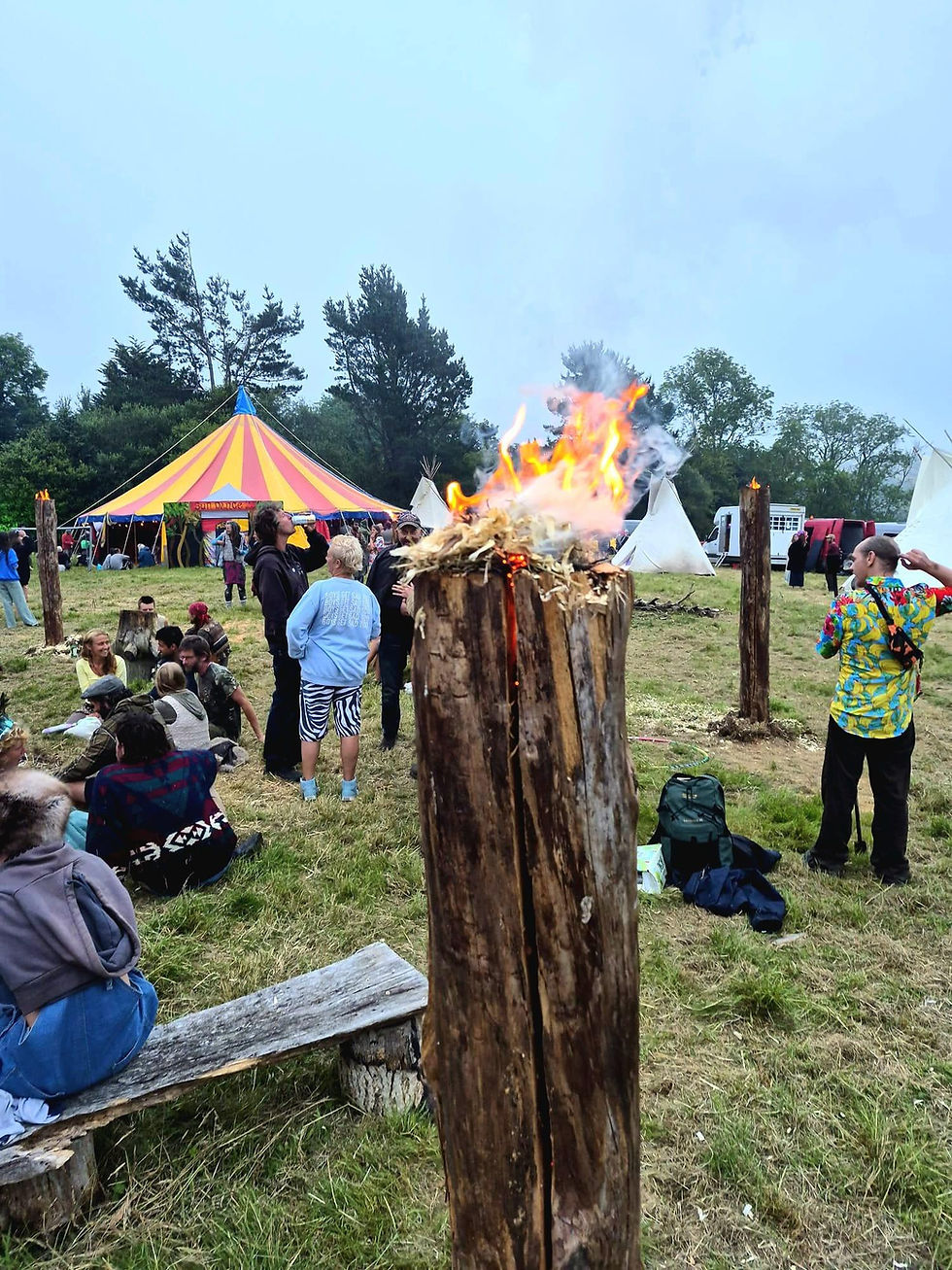
The other huge lesson I am learning through experiencing communities is the importance of communication. I have realised that I am someone who needs clarity. Maybe that is partly my Aries nature; I have always had a strong need to understand where I stand, address things directly and find resolution when something feels unsettled. I struggle with unspoken tension. When things are left unsaid, when there are underlying feelings nobody acknowledges or when everyone is politely avoiding a difficult conversation, I can feel it.
The energy of what is not being said can become louder than the words themselves. I think this applies to communities as much as it applies to individuals. People living and working together will naturally experience disagreements. Everyone has different needs, different communication styles and different perspectives. Conflict is not a sign that something has failed. Conflict is a sign that humans are involved.
It is unrealistic to expect any community to exist without misunderstandings, disagreements or moments where people see things differently. In fact, I would argue that a community without conflict is probably not a healthy community. Community without conflict is just a cult. Because if everyone always agrees, if nobody questions anything and if difficult conversations are avoided at all costs, then people may not actually be communicating honestly. The difference is not whether conflict exists. The difference is how conflict is handled. Healthy communities create space for people to say, “This is not working for me.” They create space for someone to say, “I experienced that differently.” They create space for repair.
Avoiding conflict may create temporary peace, but often it simply pushes things underground. Eventually those unspoken feelings affect relationships, trust and the overall feeling of the place. The safest communities are not necessarily the ones where nothing ever goes wrong. They are the ones where people trust that when something does go wrong, it can be talked about. I am still learning this myself.
I am not saying I have mastered communication or that I always get things right. I know I have my own reactions, my own patterns and my own things to work on. But this journey has taught me that discomfort is not always something to run from. Sometimes discomfort is where the most important conversations begin. A beautiful piece of land does not automatically create a healthy community. Good intentions do not automatically create a healthy community. It is in people being able to sit in the discomfort of difference and still choose connection. It is in the ability to experience conflict as medicine not an attack on our already fragile ego’s. I am learning this comes with age, our skills to communicate and be direct.
Not rushing to find land, learning before building. Discovering what community really means
I think there is a temptation when stepping outside of mainstream living to believe that the next stage is always finding land. There is this idea that eventually we need to arrive somewhere. That we need to find the perfect piece of earth, create the home, establish the community and finally feel settled. For a while, I felt that pull strongly. I wanted roots. I wanted certainty.
I wanted to know where we would be in five years. I wanted to feel that sense of arrival. But the more I experience different communities, the more I realise that belonging is not something you can force. You cannot rush into buying land simply because you are afraid of not having anywhere to go. I had somewhere to go if needed. You can't buy land just because that’s the alternative trendy dream. You cannot create community purely from a desire to escape something. You cannot build something sustainable if it is rooted in panic. The biggest lesson I am learning is that sometimes the most important thing is not building immediately.
Sometimes the most important thing is listening. Listening to the land .Listening to the people. Listening to those that love you unconditionally that have your best interests at heart and trusting you regardless to do what is right for you. Listening to what is actually happening rather than trying to force what you want to happen.
I think there was a part of me that believed if St Clears did not become our long-term place, then perhaps I had failed. Perhaps I had chosen the wrong path. But maybe the land had never promised to hold us forever. Maybe it had simply offered us what we needed for that chapter. An initiation to validate what we wanted and needed to live differently and if we were capable of it.
The more I experience different communities, the more I realise that community is not something you can simply design on paper. It is something living. It has its own personality, its own energy, its own challenges and its own lessons. You cannot truly understand community by looking at beautiful photographs of eco-homes or reading about sustainable living. You have to experience the reality of people living together. You have to witness how decisions are made, how disagreements are handled, how resources are shared and how people respond when the dream meets the practicalities of everyday life. Because community is not just created from shared values. It is created from relationships .And relationships are where everything becomes real.
The invisible energy of land and community

One thing I have become very aware of during this journey is that being on other people’s land carries a different feeling. Every place has a frequency. Not just in the spiritual sense, but in the very real sense of how a place feels when you arrive. Some land feels immediately welcoming. Some feels cautious. Some feels busy. Some places encourage creativity and connection. Some places encourage retreat and reflection.
I think humans are very sensitive to these things, even if we do not always acknowledge it. We feel when we are welcomed. We feel when something is guarded. We feel when there are unspoken tensions. We feel when a place has been cared for. Lammas has felt welcoming in a way that has really touched me. There has been a willingness to work with us and find solutions. Even practical things, like helping us navigate bringing a 7.5-ton lorry down country lanes, have carried a feeling of cooperation rather than limitation.
There is something powerful about being around people who look at a challenge and ask, “How can we make this work?” rather than immediately focusing on why it cannot happen. That energy matters. That frequency shapes a place. But I am also learning that welcoming does not mean having no boundaries. In fact, knowing the boundaries from the beginning can actually create more safety. When expectations are clear, people can relax. When communication is open, relationships have room to grow. However arriving at Lammas was through relationships for us. Not an open door policy.
As crew at Tipi valley for their 50th anniversary we felt welcomed. Even when our amp blew we were given one to lend which saved the party. Although we were part of a crew community and honoured to celebrate there, our generator was switched off with no warning. Fair enough we don’t live here but at least give us a heads up for our last tune. But a niggle we can process in exchange for the connections we made there. The people we learned form and the music and creativity we got to witness. We bought the amp in the end and the money went on to be used for new drum skins. A beautiful example of money being used in community to feed creativity
The power of three

One of the things this experience has made me reflect on is the importance of having more than two households involved in community. When there are only two people, even with love and good intentions, things can become very binary. One person sees one thing. Another person sees another. A decision becomes two opposing viewpoints. There is no third perspective. No outside voice. No new energy entering the conversation. A third household changes something. It does not remove complexity, but it creates possibility. It creates another viewpoint. It creates fair decision making. And this has made me wonder about the deeper symbolism of three.
Across many traditions, three represents creation. Moving beyond duality. Two creates polarity. Three creates expansion. Two energies meet, and something new emerges. This pattern appears everywhere. The earth and the seed create growth. The musician and instrument create music. The person and sound create an experience. The individual and community create belonging.
The magic is not always in the separate parts. The magic is in the relationship between them. This is why I love the symbolism of the Flower of Life. It begins with a single circle. One complete being. Then another circle connects. Relationship begins. More circles emerge. A pattern forms. Something greater is created through connection. Perhaps community is the same. We do not lose ourselves when we connect. We become part of something larger.
The Land Chooses Us, Returning to Lammas, Full Circle
When we left St Clears, I think I was grieving more than just a place. I was grieving an idea. I was grieving the version of the future I had imagined when we arrived there. I had pictured staying longer, becoming more embedded, building deeper relationships with the land and the people around us, creating regular sound journeys and allowing my practice to become part of the everyday rhythm of life rather than something that only happened when I had booked an event.
There was something painful about leaving before I felt ready. When you choose an unconventional path, there can sometimes be an expectation that every decision should look intentional. That every move should make sense. That every challenge should immediately reveal its lesson. We tell ourselves that if we have chosen this way of living, we should always be confident, certain and connected to some bigger plan.
But real life is not always like that. Sometimes we are simply human. Sometimes we feel disappointed. Sometimes we question ourselves. Sometimes we wonder whether we have made the wrong choice. But to me there is no wrong choice despite how it can feel. It is just a choice that leads to another that we then perceive to be right.
I found myself feeling that grief. Not because St Clears had been a failure, but because I had loved the vision of what I thought it would become. There is a particular kind of sadness that comes when something beautiful ends before you feel complete with it. I had to sit with the feeling that perhaps I had lost something. But with time, I have started to understand that maybe I had not lost anything. Maybe something had simply changed form.
The land chooses us
The more I live this way, the more I question whether we truly choose land, or whether sometimes the land chooses us. We often talk about finding somewhere. Finding a home. Finding a place. I have had a home and a place since a child, this has formed part of my conditioning that made me rush to buy land when things didn’t last as long as I needed them to.
Perhaps certain places arrive in our lives at the exact moment we need them. Perhaps they hold us through a particular season. Perhaps they teach us something before they ask us to move again. Looking back, I can see that St Clears gave us something incredibly important. It gave us space. It gave us freedom. It gave us the opportunity to experiment. It gave us the environment where our jam space The Groove Temple could be born.
At the time, I was focused on what was not happening. I was focused on the sound journeys I was not holding .I was focused on the vision I thought was not unfolding. But sometimes when we are inside an experience, we are too close to see what is actually being created. Sometimes we only understand the purpose when we have moved further away. The seed is planted long before we see the tree.
Coming back to Lammas feels like one of those moments where life creates a circle. Years ago, Lammas was where I trained in sound healing. It was where something shifted inside me. I arrived there wanting to learn about sound, but what I found was much bigger than a qualification. It changed the direction of my life. It opened something that had always been there but had not yet found a voice. Sound became more than music. It became connection. It became healing. It became a way of understanding the relationship between humans, vibration, emotion and the nervous system.
At the time, I never imagined I would return years later, not as someone searching for the beginning of my journey, but as someone returning with experience, questions and a deeper understanding of what I wanted to explore. The strange thing is that I thought leaving St Clears meant moving away from the dream. But returning to Lammas showed me that perhaps I was being brought back to the place where the original seed was planted. Not to repeat the past. But to continue the story. This time, I was not coming back to take. I was not coming back to buy land, claim a place or force a future. I was coming back to listen. To learn. To experience. To understand community from the inside rather than imagine it from the outside.
What I thought I lost, I found again

One of the biggest surprises of this journey has been realising that what I thought I lost in St Clears was actually returned to me in a different way. One of the things I wanted most was space to practise. I wanted to sit with my gong. I wanted my instruments to be part of my everyday life. I wanted sound to exist beyond scheduled events again.
But the reality of living in a yurt also came with challenges. A yurt is beautiful. There is something incredibly special about living in a round space, feeling connected to the outside world and waking with the rhythms of nature. But practical things matter too. Dry storage matters. Security matters. Space matters. Storage was minimal, permission to build was non existent. My instruments often needed to be packed away safely until they were needed for a session. My relationship with my gong became connected to bookings and events rather than simply being something I could sit with whenever I felt called. The horsebox changed that. What I initially saw as a compromise became a gift. Having my home on wheels means my practice travels with me.
My instruments are accessible. My gong is close. Fitting neatly in the cab area. My sound space is close. The thing I thought represented losing stability actually gave me a different kind of stability. A doorway. A practice space. A place where I can create from my doorstep. The place where I first played a gong now allows me to integrate her back into my daily rhythm, the land and the dry horsebox. It is funny how life sometimes gives us exactly what we were asking for, just not in the packaging we expected. We have to shed sometimes to make way for what we asked spirit for.
When I look back now, it feels almost poetic that my journey has returned me to Lammas. The place where I first discovered sound healing became the place where I returned to explore what sound could become. The place where I learned about listening became the place where I learned to listen differently. Not only to sound. But to land. To community. To timing. To life.
I came here thinking I had lost a dream. But perhaps the dream was simply expanding. Perhaps I was being asked to release my attachment to how it was supposed to look. The land was never asking me to arrive. It was asking me to pay attention. Because sometimes we do not choose where we belong. Sometimes we are invited. Sometimes we are redirected. Sometimes the land holds us exactly where we need to be, until we are ready for the next movement. And sometimes, if we are willing to listen, we realise that what we thought was the ending was actually the beginning of something we could not yet imagine.
I think we often see endings as evidence that something has gone wrong. But perhaps endings are sometimes just redirections. The dream of St Clears ending was painful because I was attached to the shape of it. I wanted the land to look a certain way. I wanted the journey to unfold in a certain order. But life does not always follow the blueprint we create. Sometimes the universe, or the land, or whatever language we choose to use, sees a bigger picture than we do. Sometimes we are being moved because there is something else waiting. I can see now that St Clears was not the place where we were meant to create our final community. It was the place where The Groove Temple needed to be born. I know innerstand that is why we were at St Clears. It was the place where we needed the space, the knowledge, the relationships and the freedom to experiment.
From sound healing to collective creation
My relationship with sound has always been about more than simply creating a relaxing experience. The gong, the bowls, the drum, the voice and the frequencies are all powerful tools for connection. They can create a space where people slow down, turn inward and reconnect with themselves. There is something deeply healing about a ceremonial sound journey. A room of people lying down together. Breathing together. Listening together. Entering a shared state of presence. That space will always be important. But through The Groove Temple, I began discovering another form of holding space. A different kind of ceremony. A more active one. Instead of people lying still and receiving, people were moving, dancing, responding and participating. Instead of silence and stillness, there was rhythm. Instead of one practitioner holding the container, there were musicians, instruments and the collective energy of everyone involved creating something together.
I began to realise that holding space does not always mean creating stillness. Sometimes holding space means creating freedom. Sometimes it means creating enough safety that people can express themselves. Sometimes healing happens through rest. Sometimes healing happens through movement. Sometimes healing happens when people remember that they are alive.
The unexpected birth of Groove Temple

The Groove Temple was not something we sat down and strategically planned. It emerged.
It grew through relationships, experimentation and a love of music. It grew through an organic celebration between friends. It was not just a jam session. It was not just a performance. It was a shared experience. The idea was to create a space where musicians were not simply entertaining an audience, but where everyone present became part of the energy. The audience was not separate. The room itself became the instrument. This became a completely different expression of the same values that sit behind sound healing. Connection. Presence. Listening. Response. Co-regulation.
The difference was that instead of the gong creating the vibration, it was the whole collective. The drummer. The bass player. The guitarist. The electronic sounds. The dancers. The ravers. The people standing at the edge simply taking it all in. Everyone contributed to the atmosphere.
The medicine of St Clears
Looking back now, I can see that St Clears gave us exactly what we needed. At the time, I thought I had moved there to create community. But perhaps I had moved there to create the thing that would eventually connect us with other communities. Without the space at St Clears, The Groove Temple may never have existed in the way it does now. We had room to experiment. Room to make noise. Room to bring people together. Room to explore what happened when music moved beyond a traditional stage or a traditional performance. No sets, no line ups, hours of free flowing jammin' where you’d never see the same set twice.
We had access to people with knowledge of sound systems and sound engineering. We had the space to explore bigger setups and festival-style experiences. We had the freedom to ask, “What happens if we take this further?” The thing I thought was missing was actually the thing being created. I wanted community. What we were creating was a different kind of community space. I wanted sound healing. What we were was creating was another form of sound medicine. I wanted connection. What we were creating was a place where people connected through rhythm. Sometimes we cannot see the purpose of a chapter while we are living it. We only understand it when we turn around and look back.
Groove Temple enters the festival world
As Groove Temple grew, something unexpected happened. The project began finding its way into festivals and gatherings. The summer season became a time of seeing the vision expand beyond what we originally imagined. What started as an experiment became a space people wanted to experience. And this showed me something important. Sound healing does not always have to happen in the places we traditionally expect it. Healing can happen in a quiet room. It can happen in a yurt. It can happen lying beneath blankets listening to a gong. But it can also happen outside. It can happen through amplified sound. It can happen through collective rhythm. It can happen through dancing with strangers. It can happen through your head in a bass bin. The form changes. The intention remains.
The unexpected welcome at Lammas
When we arrived at Lammas, I honestly did not know whether Groove Temple would fit. In many ways, it seemed like an unlikely combination. Lammas is rooted in sustainability, low-impact living and connection with the land. Acoustic music around a fire. The Groove Temple involves amplified music, large speakers, sound systems and, practically speaking, the need for power.
Generators. Fuel. Equipment. Noise. On the surface, these things might seem like they belong to completely different worlds. Part of me wondered whether we would find a place that could hold both. Would an eco-community understand the value of a sound system?Would a place focused on reducing impact see amplified music as a positive contribution?Would we be asking too much?
But what surprised me was that within our first month at Lammas, we were able to create space for The Groove Temple. And surprisingly we weren’t the only rig at the party. But we were the loudest. The very place where I trained in sound healing became one of the places where sound could evolve into something completely different. That felt significant. Almost like another full circle. The lesson was not that everything should automatically be accepted. The lesson was that different expressions can sometimes coexist when there is communication, respect and understanding.
When creativity meets community
Of course, not everyone was necessarily excited. And that is part of community. Sometimes we may bring something that feels important and meaningful to us, but that does not mean everyone experiences it in the same way. A sound system that feels like freedom and connection to one person might feel overwhelming or disruptive to another.
Both experiences can exist. This is where communication matters. This is where community becomes real. There may have been residents who found it challenging. There may have been people who questioned whether it fitted. And that is okay. A community is not healthy because everyone loves everything. A community is healthy when there are ways to navigate differences. The decision went through the appropriate process. There was discussion. There was a vote. And a vote is a vote. The responsibility then becomes respecting the agreement. Creating within the boundaries. Being considerate. Understanding that being welcomed into a space comes with responsibility. Freedom is not the absence of consideration. True freedom includes respect.
Following the flow of life where nothing is forced was also the frequency of The Groove Temple at Lammas. We didn’t ask, our space was invited as we offered something different from DJ’s and raving; we offered bands space, we offered musicians a place to play. We offered a safe space for anyone and everyone to join in.
We switched the soundsystem off at the agreed time. But we were still a little pleased with ourselves when told there were no complaints from Lammas residents but there were from Crymych the village 4 miles away. That would make any free part crew pleased – that’s the whole point right?! Push a clean system and sound as far as it can go. But in community stick to the agreed times as this is the exchange for allowing us to make a racket.
One of the biggest contrasts for me has been seeing how much conflict has actually strengthened The Groove Temple. Because The Groove Temple has not been conflict-free. Of course it has not. It is made of humans. There have been different ideas. Different expectations. Different creative visions. Different approaches to how things should be organised. Different workloads.
There have been moments where conversations have been gentle and thoughtful. There have been moments where emotions have been stronger. Mainly me on a comedown and my period unleashing feminine rage on unsuspecting musicians. There have been times where we have had to stop, reflect and ask ourselves how we can do things better. But every conflict has taught us something. Every challenge has improved the next event. Every difficult conversation has shown us where communication could be clearer. Every disagreement has been an opportunity to grow. Every tantrum has brought us together through the power of repair and self reflection and awareness.
The difference is not whether conflict exists. The difference is whether people are willing to use it as information. And whether everyone in the community is contributing something. We didn’t select or source a crew It organically grew from friendship and someone contributing something different making the space better and smoother work than the last party. Music itself has taught me this. A beautiful piece of music is not created from one note repeated forever. It is created through contrast. Through tension and release. Through different sounds finding a way to exist together. Maybe community works the same way. The aim is not for everyone to become the same. The aim is to learn how different people can create something together. If everyone contributes in any way they can this creates purpose. And that is what is missing from everyday life and systems.
A different understanding of belonging

I think one of the biggest things The Groove Temple has taught me is that belonging does not always mean fitting perfectly. Sometimes we imagine finding a community where everyone shares our exact vision. But perhaps that is not community. Perhaps community is where different visions meet and learn how to exist together.
The gardener. The musician. The builder. The healer. The quiet person who needs peace. The person who wants celebration. The person who wants creativity. All of these people belong. The challenge is not finding somewhere where everyone is the same. The challenge is learning how different people can share space. That is the real work of community. I don’t play within The Groove Temple but my logistics and management skills are integral to organising flakey musicians and demanding festival organisers. Our bass player is rubbish at unloading and packing away but he can play bass for a good 4 days straight. And everything follows the bass the rest is decoration.
The beautiful thing is that The Groove Temple was born in St Clears, but it was never limited to St Clears. The land gave it life. The relationships gave it energy. The festivals gave it wings. And returning to Lammas gave it another place to grow. Perhaps this is another reminder that endings are not always endings. Sometimes something has to leave one place in order to find its next expression. St Clears was not where The Groove Temple stayed. It was where The Groove Temple was born. And perhaps that was the purpose all along. Because sometimes we believe we are looking for a place to belong, when actually we are carrying something that needs to find its place in the world. The land does not always keep us. Sometimes the land births us. And then it sends us onwards.
Community Without Conflict Is Just a Cult
When I first stepped away from mainstream living, I think there was a part of me that believed I was stepping away from many of the problems that came with it. I imagined that alternative communities would naturally be different because the people choosing that path had already questioned the systems around them. They had stepped outside the expected route of mortgages, careers, consumerism and conventional ideas of success. Surely people who had chosen a different way of living would have already done the inner work needed to create something more connected, more conscious and more compassionate.
I think I romanticised community. I imagined shared values would automatically create shared understanding. I imagined that when people cared about the land, sustainability, creativity and connection, the difficult parts of human relationships would somehow become easier. I thought that leaving behind the pressures of mainstream society would also mean leaving behind some of the challenges that come with being human. What I have learned is that community does not remove the human experience.
It magnifies it.
When people live closely together, create together and share resources, everything becomes more visible. The beauty becomes more visible. The generosity becomes more visible. The creativity becomes more visible. But so do the differences, the frustrations, greed, selfishness the fears and the places where people struggle to communicate. Community does not make us less human. It reveals our humanity. And perhaps that is the real work. Not creating a space where conflict never happens, but creating a space where conflict can be moved through with honesty, compassion and respect.
The dream of community versus the reality of community

I think one of the biggest lessons from St Clears was realising that many people love the idea of community, but the reality of community is much more complex. The idea of community is beautiful. Sharing meals. Growing food. Supporting each other. Children playing together. Music around fires. People having skills and knowledge that are shared freely. A slower pace of life. A sense of belonging. It is an incredibly attractive vision.
But living in community asks something different from simply admiring the idea. It asks us to compromise. It asks us to communicate. It asks us to consider other people's needs alongside our own. It asks us to be seen. And sometimes, I think what many of us actually want is not full community, but the feeling of community alongside the comfort of having our own independence.
We want connection, but we also want privacy. We want people around us, but we also want our own space. We want support, but we also want autonomy. And perhaps that is not a failure. Perhaps that is simply human. The challenge is being honest about what we actually want. Because sometimes we can move towards an off-grid or alternative lifestyle believing we want full communal living, when actually what we are searching for is something in between. A balance between connection and independence. A place where we can know our neighbours, share resources and feel part of something, while still having our own sanctuary to retreat to.
Maybe the future of alternative living is not one model. Maybe it is about discovering the different ways humans can belong. Looking back at our time in St Clears, I do not see it as a failure. I think it would be easy to tell the story that way. To say it did not work. To say the dream ended. To say we left because something had gone wrong. But that would not be the truth. St Clears gave us so much. It gave us space. It gave us freedom. It gave us the environment where Groove Temple could be born. It gave us relationships, experiences and opportunities that would shape everything that came afterwards. Without St Clears, Groove Temple would not exist in the way it does now. Without that space, we would never have had the opportunity to experiment with sound, community and what happens when people gather around music.
The lesson was not that St Clears was wrong. The lesson was that every place teaches us something. And I think one of the biggest things it taught me was that good intentions are not enough to create a healthy community. People can genuinely care. People can genuinely want the same thing. People can genuinely have beautiful visions. But without communication, boundaries and the willingness to have difficult conversations, even the most beautiful ideas can become complicated.
Finding the balance between freedom and stability
I think another lesson I have learned is that there is no perfect way to live. Sometimes we can romanticise one lifestyle while criticising another. We can look at mainstream society and see only restriction. We can look at off-grid living and see only freedom. Or recoil at the thought of a shared long drop. But the reality is much more complicated. Mainstream living offers stability. It offers infrastructure. It offers predictability. It offers systems that, although imperfect, provide certain forms of security. Off-grid and alternative living offer freedom, creativity and the opportunity to question what we have been told is normal. But they also require more communication, more adaptability and more personal responsibility.
Neither path is perfect. The question is not which one is right. The question is what balance works for us. Perhaps some people are meant to live in full community. Perhaps some people are meant to live independently but connected. Perhaps some people need the security of mainstream structures. Perhaps some people need the wildness of something different. There is no shame in recognising what we actually need rather than chasing an idealised version of a lifestyle. And until we know that and honour what we need maybe pass through, give what you can and move on.
The Dream of Land: OPD, Planning and the Reality of Creating a Different Way of Living
For a long time, I thought finding land was the final destination. I think many people who step outside mainstream living have this vision. We imagine that once we have the land, everything else will fall into place. The land becomes the answer. The place where we finally belong. The place where we can build, grow, create community and live in a way that feels more connected to nature and ourselves.
I understand that longing because I have felt it deeply. There is something incredibly powerful about imagining a piece of land where people can live differently. A place where children can grow up closer to nature. A place where people can share skills, grow food, care for animals, create music, support each other and step outside some of the systems that no longer feel aligned. Wales has something incredibly special in this regard.
The One Planet Development planning policy is a genuinely inspiring opportunity. It recognises that people can live differently. It creates a pathway for low-impact living and acknowledges that sustainability is not just about individual actions, but about how we design our relationship with land, resources and community. In many ways, it represents a dream that many people carry. A chance to do things differently. A chance to move away from endless consumption. A chance to create homes and lifestyles based around ecological responsibility rather than simply financial value. But the more I learn about OPD, the more I realise that even the most visionary systems still exist within the realities of the world around them. And that is where things become complicated.
I think one of the biggest challenges is that many people fall in love with the dream of land without fully understanding what living on land requires. A beautiful piece of countryside can look like freedom. A field can look like possibility. A woodland can look like an escape. But land is not just a view. Land is responsibility. Land asks something from you. It needs care. It needs maintenance. It needs knowledge. It needs attention.
A large acreage of land cannot simply be held by two people with good intentions and a romantic vision. There are fences to maintain. Animals to care for. Trees to manage. Buildings to repair. Water systems to maintain. Paths to clear. Food to grow. Infrastructure to develop. Life continues whether you are tired, busy, travelling or needing a break. There is always something to do. The reality of land is that it is alive. It does not pause because humans need time away. And this is where I think community becomes such an important part of the conversation. Because perhaps the mistake is thinking that land is the foundation of community. Maybe it is actually the other way around. Maybe community is what allows land to thrive.
The accessibility problem
One of the things that concerns me about OPD is accessibility. The original spirit of these policies feels aligned with people who have skills, passion and a desire to live differently. But the reality of entering that world can be incredibly difficult. Land prices are high. Planning processes are complex. The financial commitment is huge. For someone with a lot of money, buying land may be possible. For someone with the skills, experience and commitment but without financial resources, the pathway becomes much harder. And that creates a difficult imbalance.
The people who may have the practical skills to make a piece of land work are not always the people who can afford to access it. Someone may have years of experience in growing food, building, working with animals, caring for land or creating community, but still not have the financial ability to purchase acreage. At the same time, someone with significant financial resources may be able to purchase land but may not necessarily have the skills, experience or desire to live in a truly low-impact, community-focused way. This is not a criticism of individuals. People come with different backgrounds and different dreams. But it does raise an important question. How do we make sure alternative living is not only accessible to those who already have financial privilege?
Because if the people most able to access land are those with money, but not necessarily those with the practical skills or community mindset, then we risk recreating the very systems many people are trying to step away from.
The opportunity Wales holds
Despite all of these challenges, I still believe Wales has an incredible opportunity. There is something very special about the possibility of people creating a different relationship with land. A relationship based on care rather than ownership. A relationship based on stewardship rather than extraction. A relationship based on connection rather than consumption. But perhaps we need to be careful not to romanticise the dream without respecting the reality. Land is not just freedom. Land is commitment. Community is not just belonging. Community is responsibility. Alternative living is not about escaping every challenge. It is about choosing which challenges are worth facing. The dream is not a life without work. It is a life where the work feels meaningful.
Perhaps our purpose right now is not to obtain land, but to help create the spaces where land, music and creativity can come alive. Maybe the role of The Groove Temple is not to build a permanent place yet, but to bring people together in the places that already hold the energy. To bridge the worlds of jamming, improvisation and sound system culture. To create spaces where musicians, artists and people who simply want to experience something different can meet.
Because perhaps off-grid living and sound system culture are not as separate as they first appear. Both were born from people questioning the mainstream. Both came from a desire to gather differently, to create outside of conventional structures, to find freedom, expression and connection in the fields. The same landscapes that hold eco-villages have also held festivals, gatherings and moments of collective creativity.
Maybe this is the higher purpose that is unfolding. Maybe we are not meant to own the land yet. Maybe we are meant to listen to it. To bring sound where sound is needed. To create meeting points between ancient gathering, modern technology, improvisation and ceremony. And maybe that will fail too. Maybe one day this version of the dream will change, evolve or come to an end, just like every other chapter has. But I have realised that allowing fear to dictate every decision is not the same as being responsible. Sometimes the greatest risk is never following the things that make us feel alive. Because honestly, the alternative is far less exciting.
I would rather be standing in a field listening to my friend play a kazoo while singing along to jungle drums and a 60s Juno synthesiser, surrounded by people laughing, dancing and creating something that has never existed before, than be perfectly secure but disconnected from the magic of being alive.
A friend once said to me, when I described myself as “plodding along”, “I don’t plod. I march or dance.” That sentence stayed with me. Because that was exactly what I needed to hear. I do not want to spend my life carefully walking towards a future that may never arrive. I want to be present enough to notice the moments already happening. Sometimes we are so focused on finding the destination that we miss the dance along the way. But dancing does not mean ignoring reality.
And sometimes the most loving thing we can do for ourselves, others and the land is to know when it is time to move on. I have learned that leaving does not always mean failure. Sometimes leaving is an act of respect. It means recognising when something has taught you what it needed to teach you, when a chapter has given everything it could give and when staying would begin to create more harm than growth. There is a difference between conflict that stretches us and conflict that breaks us. There is a difference between discomfort that helps us evolve and environments that slowly disconnect us from ourselves.
If the energy of a place starts to feel heavy, if other people’s unresolved wounds, ancestral patterns or lower frequencies begin to pull me away from my own centre, I can honour that without taking responsibility for carrying it. Some things belong to the journey of others, not mine to hold. The horse can carry us forward, but our sound will travel with us. The instruments, the frequencies and the medicine we create are not tied to one piece of land. The land will call our sound to wherever it is needed next. I still believe in community. I still believe in creating something beautiful. I still believe there are different ways to live. But I have also learned that a healthy community needs communication, accountability and the courage to face uncomfortable truths.
Because community without conflict is not necessarily community. Sometimes it is just a place where nobody feels safe enough to be honest. And that is where the saying comes in. If it looks like a duck and sounds like a duck, it is probably a duck.
And if a community starts to feel like a cult…
It probably is.


Comments